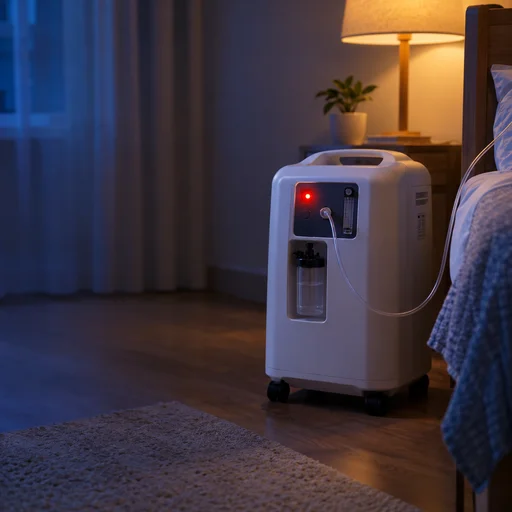
It’s 2 a.m. The house is quiet. Then your family member’s oxygen concentrator starts to beep. Nobody knows why. Is it serious? Do you wake someone up? Do you switch machines?
Oxygen concentrator alarm codes can feel like a foreign language when you’re half asleep. The beeps sound urgent, but they don’t say what’s wrong. That’s the frustrating part.
This post fixes that. You’ll see what the common warnings mean, what to check first, and when to call a technician. Let’s break it down.
Why Do Oxygen Concentrators Have Alarm Codes?
Your concentrator watches itself all day. It checks oxygen purity, power, temperature and flow. When something drifts out of range, it warns you before the patient feels it.
Think of it like the dashboard in a car. A warning light isn’t the problem. It’s the early notice that saves you from one.
What Do the Yellow and Red Lights Mean?
On many machines, yellow is a heads-up and red is a real problem. Take the DeVilbiss 525DS. Vitality Medical’s troubleshooting guide says yellow appears when oxygen purity drops to between 82% and 87%. Red means purity fell below 82%, or an internal part has failed.
Oxygen purity is simply the share of the air coming out of the machine that is actually oxygen.
Do All Machines Use the Same Alarm Codes?
No. Some machines use colored lights. Others show codes on a screen. An Omron concentrator manual uses E1 and E2 for compressor circuit faults and E4 for very low purity.
Your machine may use different codes. Keep the manual next to it, and check it first.
Oxygen Concentrator Alarm Codes and What Each Warning Means
Here’s where it gets specific. This table covers the most common warnings.
| Alarm | Typical signal | Common cause | First step | Call a technician if |
|---|---|---|---|---|
| Low oxygen purity | Yellow light, then red below 82% | Dirty filter, kinked tubing, worn parts | Clean filter, check tubing, use backup oxygen | Red light stays on |
| Power failure | Intermittent beeping | Loose plug, power cut, tripped breaker | Check cord and outlet, switch to backup | Unit won’t start on a working outlet |
| Overheating | Alarm or sudden shutdown | Blocked vents, hot room | Let it cool, clear airflow | It shuts down again |
| Low or no flow | Alarm, weak flow | Kinked tubing, loose humidifier bottle | Straighten tubing, tighten bottle | Flow stays weak |
| Compressor or sensor fault | Error code or red light | Internal part failure | Stop use, switch to backup | Always |
What Does a Low Oxygen Purity Alarm Mean?
This is the one to take seriously. UNICEF’s specification for medical concentrators says the machine should sound an alarm when purity falls below 82%. The same page points out that running a machine above its maximum flow rate can push purity under that line.
Common causes are a clogged air filter, kinked tubing or poor ventilation. Worn internal parts can do it too. If the light is red, switch to backup oxygen.
What Does a Power Failure Alarm Mean?
Intermittent beeping often points to a brief power loss or a loose plug, according to Vitality Medical. Check the cord and the outlet. Plug the unit straight into a wall socket, not a surge protector.
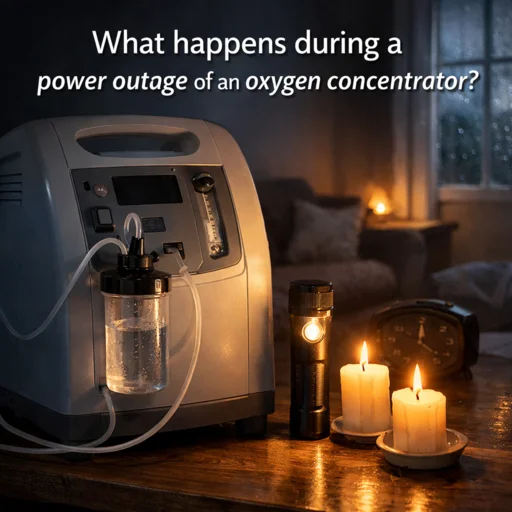
If the power is out, don’t wait. 1st Class Med advises switching to your backup oxygen source right away.
What Does an Overheating Alarm Mean?
Heat usually comes from blocked vents or a hot room. The DeVilbiss guide says the machine can run into trouble when the room goes above 104°F (40°C). It also recommends about six inches of clear space on every side.
Let the unit cool down and clear anything near the vents. High temperature alarms are standard on medical units, as UNICEF’s 8 LPM concentrator specification shows.
What Do Low Flow and Pressure Alarms Mean?
These are often simple. Kinked tubing, a loose humidifier bottle or a misadjusted flow meter can all trigger them. Straighten the tubing, tighten the bottle and check the flow setting.
Pressure alarms and compressor faults are different. Those need a technician.
What Should You Do When Your Oxygen Concentrator Alarm Goes Off?
Stay calm. Alarms are signals, not always emergencies. Take a breath, then work through the checks below.
What Should You Check First?
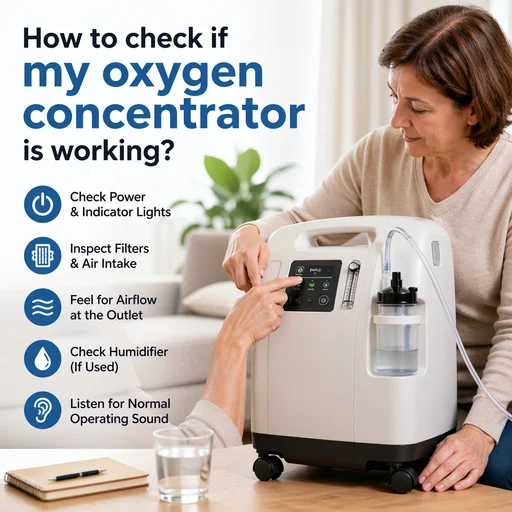
Start with the basics:
- Power cord and outlet
- Tubing for kinks
- Humidifier bottle
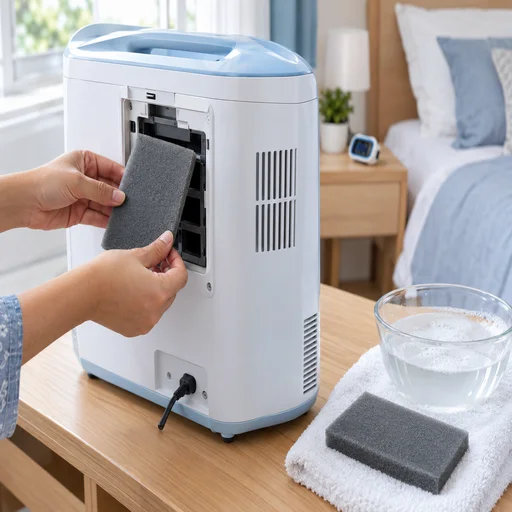
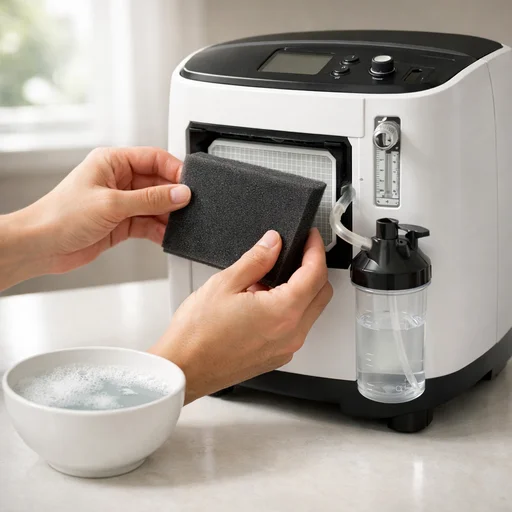
- Air filters
- Vents
- Flow setting
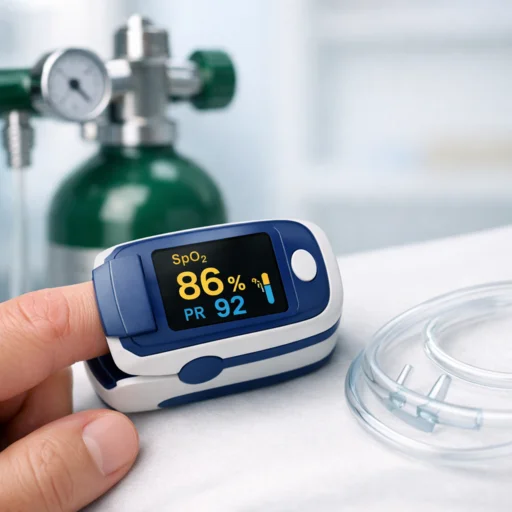
While you check, put a pulse oximeter on the patient. It shows their oxygen level in seconds. Don’t rely on it alone, though. Watch how the person looks and feels. The FDA’s tips, as reported by HealthDay, say the same.
If the checks don’t clear it, try a restart. Turn the unit off and unplug it for at least 60 seconds. Then plug it back in.
When Should You Switch to Backup Oxygen?
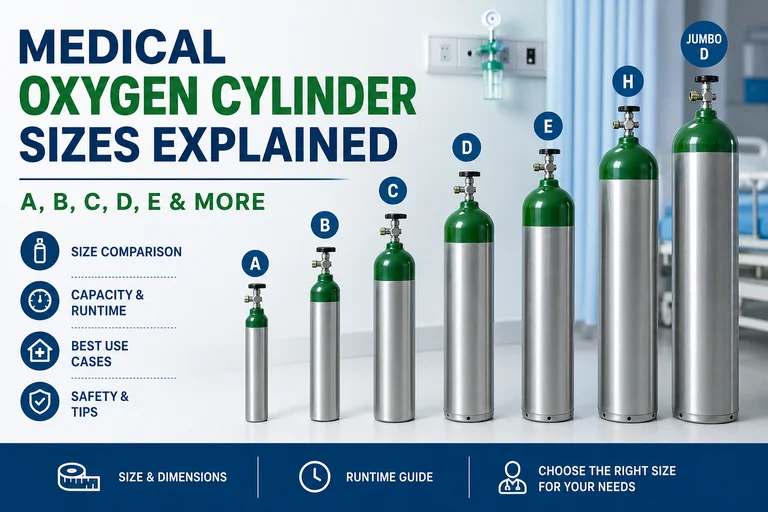
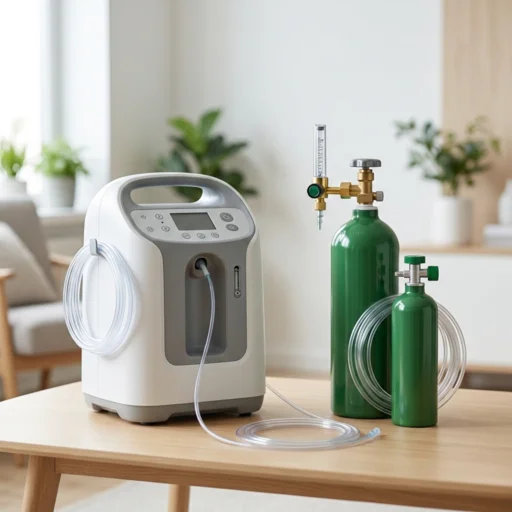
Switch if the light is red. Switch if you’re unsure. A manual for the Invacare Perfecto2 says to always keep a backup oxygen source ready, because any concentrator can stop producing oxygen. If you don’t have a backup, you can rent a backup oxygen cylinder.
When Should You Call a Technician?
Which Alarms Mean You Should Stop Using the Machine?
Stop using it if:
- A red light stays on after a restart.
- You hear continuous beeping with a red light. Vitality Medical says this points to flow failure or a serious internal fault.
- Both the green and yellow lights turn on or off together. That can mean the oxygen sensor has failed.
- The machine keeps overheating.
The Omron manual gives the same advice for a low purity alarm. Turn the machine off, use spare oxygen and call support.
Can You Fix an Oxygen Concentrator Yourself?
Only the simple things. Clean filters, straighten tubing and clear the vents. Never open the cabinet. That’s a shock risk, and it can damage the machine.
Also don’t change the oxygen settings on your own. The FDA says concentrators are prescription devices, because too much or too little oxygen can be dangerous. If the problem isn’t obvious, contact our team.
How Can You Prevent Oxygen Concentrator Alarms?
Most alarms come from small, avoidable things. Keep the vents clear. Don’t put clothes or books on top of the unit. NCOA’s home oxygen safety guide recommends both, plus regular checks for alarms.
Clean the filters on a schedule. Book professional servicing too. Vitality Medical suggests every 12 months for the DeVilbiss unit. Check your own manual for your model’s schedule.
Final Thoughts
An alarm is your machine asking for attention. Yellow means check it. Red means switch to backup oxygen. If it keeps going after a restart, call a technician.
Keep your manual close and your backup oxygen ready. If your current unit is ageing, a reliable replacement like our Yuwell 5L oxygen concentrator is worth a look.
Call us at 01714558407