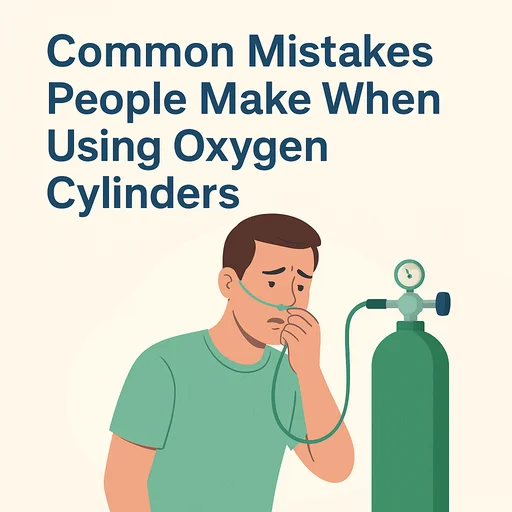
The cylinder arrives. The delivery person sets it down by the bed, and a relative says, “Be careful with that. It can blow up.”
Everyone goes quiet. Now you’re wondering if it should even be in the room.
So, can oxygen cylinders explode? Yes, but it’s rare. And it doesn’t happen for the reason most people think. The gas inside isn’t the problem. The pressure, the valve, and what’s around the cylinder are.
Most of the fear comes from half-truths. Some are too scary. Others make people careless. This post separates the myths from the facts, so you know what actually matters. If you use oxygen cylinders at home, or you care for someone who does, this is for you.
Let’s start with the short answer.
Can Oxygen Cylinders Explode? The Short Answer
Does Oxygen Itself Burn Or Explode?
No. Oxygen doesn’t burn, and it doesn’t explode on its own. MedlinePlus says oxygen makes things burn much faster. West Virginia’s public safety office says it will not explode, but fires start easier and burn quicker around it.
Think of oxygen as a fan blowing on a campfire. The fan isn’t the fire. It just makes the fire much worse.
So Why Do People Say Cylinders Explode?
Because a cylinder is a metal container packed with gas under heavy pressure. Georgia Tech’s gas cylinder fact sheet says some cylinders hold more than 2,000 psi. That’s pounds per square inch, a measure of how hard the gas pushes outward. It’s a lot of stored energy.
Real accidents do happen. In 2014, an oxygen cylinder blast at a re-rolling mill in Rupganj killed two workers and injured about ten more, The Daily Star reported. The cause wasn’t known at the time. A factory is very different from a bedroom. But it shows why cylinders deserve respect.
Oxygen Cylinder Myths vs Facts
Here’s a quick look at what’s true and what isn’t.
| Myth | Fact |
|---|---|
| Oxygen is flammable. | Oxygen isn’t flammable. It makes other things burn faster. |
| Oxygen explodes on its own. | It doesn’t. Trouble starts with damage, heat, or contamination. |
| A fallen cylinder always blows up. | Rarely. The bigger risk is a broken valve turning the cylinder into a projectile. |
| Switching it off makes smoking safe. | No. Clothes, hair, and bedding hold extra oxygen. |
| A little hand cream or oil is harmless. | Oil and grease can react violently with pressurized oxygen. |
| Only hospitals need to worry. | Homes need the same care. |
Myth: A Cylinder That Falls Over Will Blow Up
Not usually. A fall doesn’t light a fuse. The real danger is the valve, the part on top that controls the gas. If it snaps off, the gas escapes with great force and the cylinder can shoot across the room.
The Global Fund’s oxygen cylinder briefing calls this a projectile risk. A heavy metal cylinder flying around can hurt someone even with no fire at all. That’s why cylinders must stay upright and secured.
Myth: Turning The Oxygen Off Makes Smoking Safe
It doesn’t. Mass.gov says there’s no safe way to smoke around home oxygen. Even with the flow off, your clothes, hair, bedding, and tubing hold extra oxygen. One spark can catch fast.
A case report on smoking and home oxygen estimates that 15 to 25 percent of patients on oxygen keep smoking. It also says smoking is behind 83 percent of home oxygen burn injuries. Those numbers are why this myth matters most.
What Causes An Oxygen Cylinder To Explode?
Nearly every serious case comes back to three things.
A Damaged Valve And High Pressure
Dropping, dragging, or knocking a cylinder can hurt the valve. Georgia Tech’s fact sheet says to keep the protective cap on when the cylinder isn’t in use. It also says to move it with a cart and never lift it by the valve.
Oil, Grease, And Opening The Valve Too Fast
Pure oxygen under pressure can react violently with oil and grease, Ontario’s labour ministry warns. Opening a valve too fast can also create heat from friction. Put those together and you have a real hazard.
So never put oil, lotion, or lubricant near the valve or regulator. A regulator is the device that lowers the gas pressure so it’s safe to breathe. Let your supplier fit it.
Heat, Flames, And Smoking
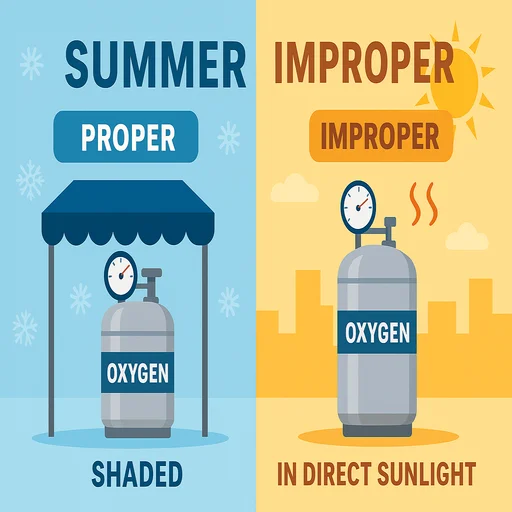
Heat can make a cylinder rupture, which means it splits open. Georgia Tech’s sheet also notes that oxygen can intensify a fire. Keep cylinders away from stoves, heaters, candles, and cigarettes.
MedlinePlus advises keeping oxygen 6 feet, about 2 meters, from heat sources and flames. More space is better.
Can An Oxygen Cylinder Explode At Home?
It’s unlikely when you handle it well. Most of the risks above are easy to avoid. Here are the questions families ask most.
Is It Safe To Keep A Cylinder In The Bedroom?
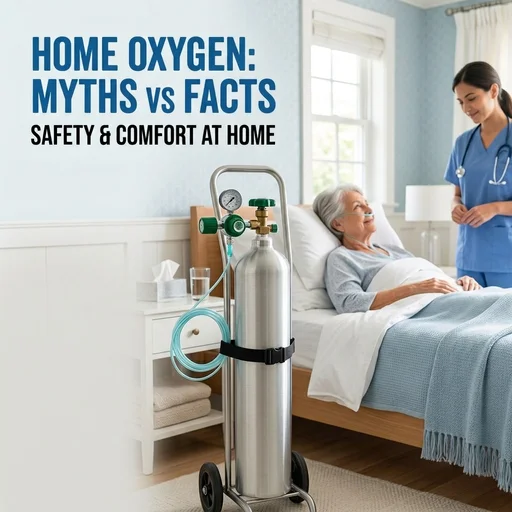
Yes, if it’s upright, secured, and well away from heat. Keep the room ventilated. Don’t store it in a closet, a box, or a car trunk, as MedlinePlus advises. A cylinder needs air around it.
Also, skip the gas stove while oxygen is in use. Flames and oxygen don’t mix.
How Far Should It Be From Flames And Heat?
Keep at least 6 feet, about 2 meters, between the cylinder and any flame or heat source. That includes candles, matches, stoves, and heaters. Some guides suggest more distance. If you have the space, use it.
Can I Carry A Cylinder In A Car?
Avoid it if you can. Never leave a cylinder in a trunk. If you must move one, keep it upright and secured so it can’t roll. If you only need oxygen for a short time, you can rent an oxygen cylinder and let the supplier handle delivery.
How To Use An Oxygen Cylinder Safely
Good habits remove most of the risk. Here’s what to do every day.
Storing It Right
Keep the cylinder upright and strapped or chained in a stand or cart. Georgia Tech suggests securing it about a third of the way down from the top. Keep the cap on when it’s not in use. Store it where air can move.
Handling It Right
Use a cart. Don’t roll it, drag it, or lift it by the valve. Keep oil, lotion, and grease away from the valve and regulator. Open the valve slowly, and turn it off when you’re done.
Use a trusted oxygen cylinder refill service, so your cylinder is filled by people who know what they’re doing.
Smoking And Flames
No smoking in the room. No candles. No matches. Put a “No Smoking” sign on the door, as MedlinePlus suggests. Ask visitors to smoke well away from the house.
Make sure you have working smoke alarms and a fire extinguisher you can reach.
The short version
So, can oxygen cylinders explode? Yes, but it’s rare, and most cases are preventable. Oxygen itself doesn’t explode. It makes fires worse. The real dangers are damage, oil, heat, and smoking.
Keep the cylinder upright, secured, and away from flames. Keep it out of the hands of anyone who doesn’t know how to use it. That’s most of the job.
Marium Oxygen supplies cylinders, refills, and rentals across Dhaka. If you’d rather not have a high-pressure tank at home, oxygen concentrators are another option. They still need to stay away from flames. Not sure which suits you? Contact our team and we’ll help you choose.
Call us at 01714558407