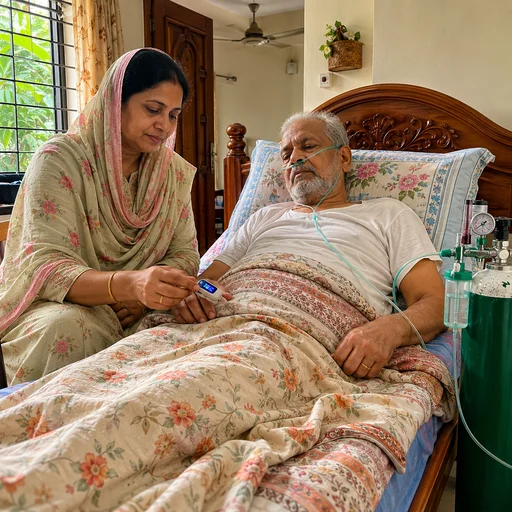
You’re sitting at home with a family member on oxygen therapy. The cylinder is running. The flow meter is set to some number. But nobody really explained what that number means, who decided it, or what happens if you change it.
This situation is more common than you’d think. Many families start oxygen therapy with almost no practical guidance. They know their loved one needs oxygen. They don’t know much else.
This post answers the six questions patients and caregivers ask most — clearly and directly. Who controls the flow rate. What too much oxygen actually does to the body. How to tell if the therapy is helping. Whether oxygen should run all day or only when breathing gets hard. Whether it genuinely improves life for people with chronic conditions. And whether it’s safe to use long-term.
Let’s get into it.
Who Decides the Correct Oxygen Flow Rate?
Why Flow Rate Isn’t a Number You Should Set Yourself
Oxygen is a medication. That’s not a metaphor or an exaggeration. Just like you wouldn’t adjust a blood pressure medication dose on your own, you shouldn’t change your oxygen flow rate without a doctor’s instruction.
The American Thoracic Society is clear on this: oxygen requires a prescription from a healthcare provider, and that prescription will include a specific flow rate — one for rest, one for activity, and sometimes one for sleep, because your oxygen needs change depending on what you’re doing.
How Doctors Determine Your Specific Flow Rate
Your doctor sets your flow rate based on a target oxygen saturation level — your SpO2. SpO2 (short for peripheral oxygen saturation) is the percentage of your hemoglobin that’s carrying oxygen. Think of hemoglobin as tiny delivery trucks in your bloodstream. SpO2 tells you how many of those trucks are fully loaded.
For most adults, the target SpO2 is 94–98%. For patients with COPD or other chronic respiratory conditions, the target is often lower — around 88–92% — for reasons we’ll cover in the next section.
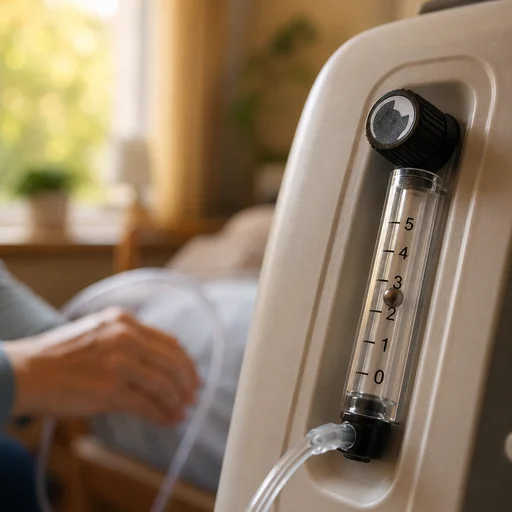
The doctor finds the lowest flow rate that keeps your SpO2 within that target range. That flow rate — measured in litres per minute (LPM) — is what gets prescribed. A common starting rate is 1–2 LPM via nasal cannula, though this varies widely by condition severity.
What Happens If a Patient Uses Too Much Oxygen?
The Risk of Hypercapnia in COPD Patients
This is a question many people don’t think to ask — and it matters.
For most patients, the risk of getting slightly too much oxygen is low. But for people with COPD (chronic obstructive pulmonary disease), it’s a different story.
When someone with COPD gets too much supplemental oxygen, it can cause hypercapnia — a dangerous buildup of carbon dioxide in the blood. Normally, your body uses rising CO2 levels as the signal to breathe. In some COPD patients, too much oxygen disrupts that signal, and the body slows breathing down. CO2 builds up. Blood becomes more acidic. This is a medical emergency.
WebMD’s COPD resource explains that this can happen slowly or suddenly. Acute hypercapnia — a sudden spike in CO2 — is especially dangerous because the kidneys can’t compensate fast enough. In severe cases, it can lead to loss of consciousness.
Signs That Oxygen Levels May Be Too High
Watch for these warning signs, especially in COPD patients:
- Waking up with a dull, throbbing headache
- Feeling unusually drowsy or mentally foggy during the day
- Flushed or warm skin in the face and hands
- Slowed or laboured breathing
If you notice any of these signs, don’t increase the flow rate further. Contact a doctor immediately.
How Can You Tell If Oxygen Therapy Is Working?
Numbers to Watch on a Pulse Oximeter
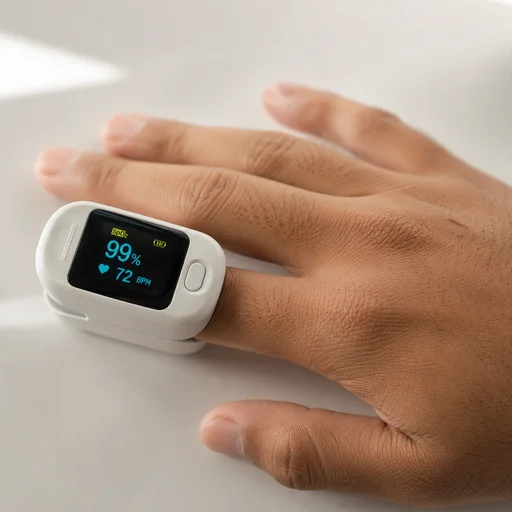
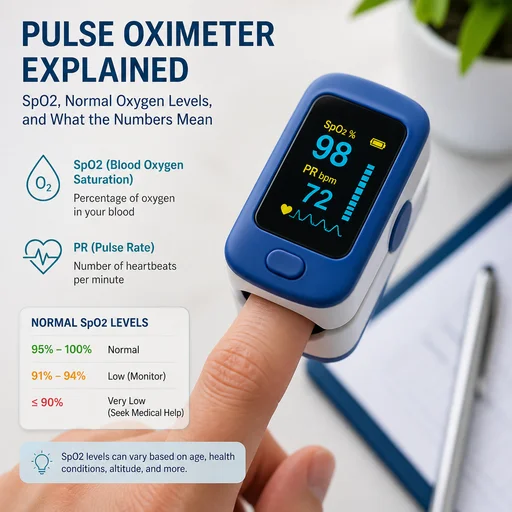
The most direct way to check is with a pulse oximeter — a small device that clips onto a finger and measures SpO2 in seconds.
Here’s a quick reference for what the numbers mean:
| SpO2 Level | What It Means | What to Do |
|---|---|---|
| 95–100% | Normal range | No supplemental oxygen needed |
| 92–94% | Low-normal | Monitor closely; consult doctor |
| 88–92% | Target range for COPD patients | Controlled oxygen therapy |
| Below 88% | Hypoxemic (dangerously low) | Immediate oxygen + medical attention |
According to NCBI’s nursing skills reference, a few minutes after starting oxygen, SpO2 should begin rising toward the target range. If it doesn’t improve, that’s a sign that something needs adjusting — the flow rate, the delivery device, or the underlying treatment.
Physical Signs of Improvement
Numbers on a device tell you one part of the story. The patient’s body tells you another.
Oxygen therapy is likely working when:
- Breathing feels easier and requires less effort
- Energy levels improve — the patient can do more without getting winded
- Sleep becomes deeper and more restful
- Lips, fingertips, and skin colour look less blue or grey
- The patient reports feeling less anxious and more alert
Observation from clinical practice backs this up: increased energy and reduced breathlessness are among the first noticeable changes when therapy is working. Cognitive clarity — reduced mental fog — often follows.
Should Oxygen Be Used Continuously or Only During Breathing Difficulty?
This depends entirely on the patient’s diagnosis, oxygen levels at rest, and how much their SpO2 drops during activity or sleep.
When Doctors Prescribe Continuous Oxygen
Some patients need oxygen around the clock. This is called LTOT — long-term oxygen therapy. It’s typically prescribed when a patient’s resting SpO2 is consistently below 88%, regardless of whether they’re having an acute episode. For these patients, stopping oxygen — even for a few hours — can strain the heart, cause pulmonary hypertension (high blood pressure in the lungs), and worsen the underlying condition.
The American Thoracic Society’s clinical practice guideline gives a strong recommendation for long-term oxygen in COPD and interstitial lung disease patients with severe chronic hypoxemia (consistently low blood oxygen). If your doctor prescribes continuous use, that means continuous — not just when it gets hard to breathe.
If you’re unsure whether continuous use is right for your situation and need a reliable supply, Marium Oxygen’s oxygen cylinder rent service offers flexible plans designed for ongoing home care.
When “As Needed” Use Is Appropriate
Other patients have normal or near-normal resting SpO2 but drop significantly during activity or sleep. For these patients, oxygen is prescribed for specific situations — during exercise, during sleep, or during acute breathing episodes.
Using oxygen continuously when it hasn’t been prescribed can interfere with the body’s natural drive to breathe, especially in patients who are also managing CO2 levels. Use it as directed.
Can Oxygen Therapy Improve Quality of Life for Patients With Chronic Conditions?
Honest answer: it depends on who the patient is and how severe their condition is.
What the Evidence Says
For patients with COPD who have severe resting hypoxemia, the evidence is strong. LTOT reduces mortality and improves several quality-of-life markers — including fatigue, sleep quality, and the ability to perform daily activities.
A mixed-method study published in NCBI found that the majority of chronic respiratory disease patients on long-term oxygen therapy considered it life-saving. They reported improvements in physical health, psychological wellbeing, and their capacity to participate in daily life — though many also noted that the therapy came with practical challenges, including discomfort from the nasal cannula and reduced independence.
The Realistic Picture
For patients with mild or moderate hypoxemia, the picture is less clear. Some studies show limited quality-of-life benefit for these patients. This is why the prescription matters so much. A doctor who knows your SpO2 levels, your condition, and your lifestyle can tell you whether you’re likely to benefit from continuous oxygen — or whether a different treatment approach makes more sense.
Oxygen isn’t a fix for every breathing problem. But for the right patient, used correctly, it can mean the difference between struggling through the day and actually living it.
Is Oxygen Therapy Safe for Long-Term Daily Use?
Side Effects to Know About
When used as prescribed, long-term oxygen therapy is generally safe. But it does come with some side effects — most of them manageable.
Common ones include:
- Dryness in the nose or throat (a humidifier attached to the system usually helps)
- Nosebleeds
- Skin irritation where the nasal cannula rests
- Morning headaches
MedlinePlus and NIH’s home oxygen therapy guide both confirm that these side effects are typically mild and can be managed with small adjustments. The more serious risks — like CO2 retention — are tied to using oxygen at the wrong flow rate or without proper medical supervision, not to careful long-term use.
One thing worth knowing: recent research suggests that using oxygen for more than 15 hours per day doesn’t provide extra benefit beyond 15-hour use in most patients — and may increase the number of adverse events. Follow the schedule your doctor gives you. More isn’t better.
How to Use Home Oxygen Safely
A few non-negotiable rules:
- Never smoke or allow smoking near oxygen equipment
- Keep cylinders at least 5 feet away from open flames, candles, or heat sources
- Don’t change the flow rate yourself, even if breathing feels harder
- If your cylinder is running low, don’t wait until it’s empty — arrange a refill in advance
For patients managing home oxygen supply, Marium Oxygen’s oxygen cylinder refill service ensures you’re never caught without a supply when you need it most.
What You Should Take Away From This
Oxygen flow rate is set by a doctor for a reason. Don’t change it on your own.
Too much oxygen — especially for COPD patients — can cause hypercapnia, a dangerous CO2 buildup that needs immediate medical attention.
Track SpO2 with a pulse oximeter. A rising number after starting oxygen, combined with easier breathing and better energy, tells you the therapy is doing its job.
Use oxygen exactly as prescribed — continuously if that’s what’s prescribed, or only during activity and sleep if that’s the instruction. Don’t improvise.
For patients with severe chronic hypoxemia, long-term oxygen therapy genuinely improves quality of life. For patients with milder conditions, the benefit is less certain — another reason to rely on a doctor’s guidance.
And when you’re managing home oxygen, having reliable supply and a nearby refill service isn’t optional. It’s part of the treatment.
Call us at 01714558407