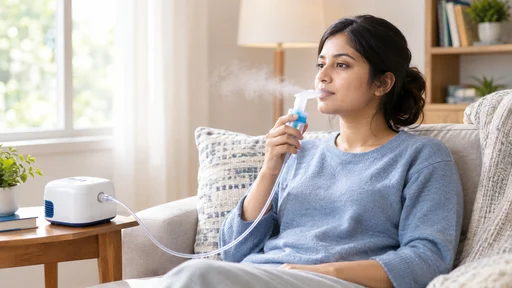
You’ve probably seen someone sitting with a mask over their nose and mouth, a small machine humming beside them, and a fine mist floating up. That’s a nebulizer at work. Maybe it was a hospital room. Maybe it was your own home, with a parent or a grandparent, or even a child.
If you’ve never had to use one yourself, the whole setup can look a little confusing. What does it actually do? Is it the same as an inhaler? Do you need a prescription, or can anyone use one?
This post answers those questions directly. No jargon you have to decode on your own. Just what a nebulizer machine is, how it works, and how to know if it’s right for you or someone you’re caring for.
What Is a Nebulizer Machine?
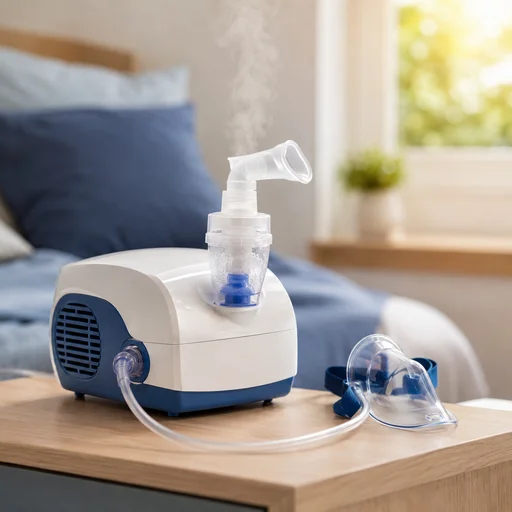
A nebulizer machine is a medical device that turns liquid medicine into a fine mist you can breathe in. Instead of swallowing a pill or using an inhaler, you breathe the medicine straight into your lungs through a mouthpiece or a mask.
Think of it like a very controlled, medically precise version of a humidifier. Except instead of just water vapor, it’s carrying actual medication deep into your airways.
This matters because some respiratory medicines work best when they reach the lungs directly, rather than passing through your stomach first.
What Is a Nebulizer Used For?
Nebulizer machines treat conditions that affect breathing. That includes asthma, COPD (chronic obstructive pulmonary disease), bronchitis, cystic fibrosis, and other lung infections that make it hard to get air in and out.
Doctors often prescribe nebulizer treatments for two situations. One is ongoing management of a chronic condition like asthma. The other is a flare-up, when breathing has gotten noticeably harder and you need medicine delivered fast and steadily.
The device isn’t just for emergencies, though. Many people use a nebulizer as part of their regular treatment plan, at home, on a schedule set by their doctor.
How Does a Nebulizer Work?
Here’s where it gets specific. A nebulizer has three main parts: a compressor (or in some models, a vibrating component), a small cup that holds liquid medicine, and a tube connected to a mouthpiece or mask.
You pour the prescribed medicine into the cup. The machine turns on and converts that liquid into an ultra-fine mist. You breathe normally through the mouthpiece or mask, and the mist carries the medicine into your lungs with each breath.
You don’t need to time your breaths or hold your breath in a certain way. You just breathe like you normally would, and the machine does the rest.
Who Should Use a Nebulizer?
Nebulizers are especially useful for people who struggle to use an inhaler correctly. That includes young children, older adults, and anyone dealing with a severe flare-up where taking a sharp, coordinated breath is difficult.
Doctors often recommend this approach for kids with severe symptoms, even if the child uses a different method for their day-to-day controller medication. The same logic applies to adults managing COPD or a serious asthma attack.
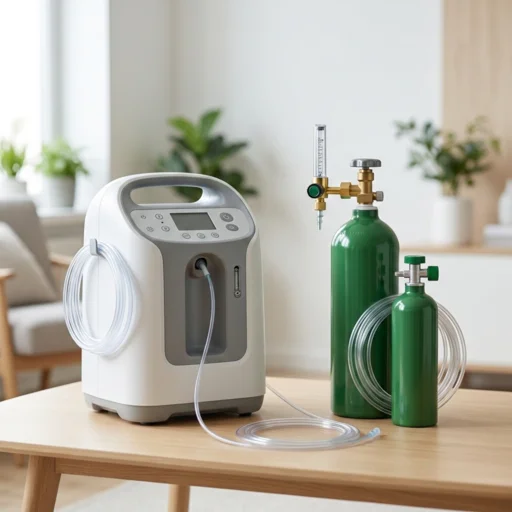
If someone in your family is also using supplemental oxygen for a related condition, it’s worth looking at oxygen concentrators as part of a broader home care setup.
Medicines Used in a Nebulizer
Nebulizers can deliver a few different categories of medication, always based on a doctor’s prescription. These typically include:
- Bronchodilators – open up narrowed airways during an asthma or COPD flare-up
- Corticosteroids – reduce inflammation in the lungs over time
- Saline solution – loosens mucus and helps clear the airways
- Combination medications – sometimes two medicines are mixed in the same treatment
You should never guess at what to put in a nebulizer cup. The medicine, the dose, and the schedule all come from a doctor, not from general advice online.
How Long Does Treatment Take?
A typical nebulizer session takes somewhere between 5 and 20 minutes, depending on the type of machine and the amount of medicine being used. For younger patients, a full treatment often runs closer to 15 or 20 minutes, while some faster mesh models can finish in under 10.
| Nebulizer Type | Typical Treatment Time |
|---|---|
| Jet Nebulizer | 10–20 minutes |
| Ultrasonic Nebulizer | 5–15 minutes |
| Mesh Nebulizer | 5–10 minutes |
If a session is taking noticeably longer than expected, check that the mask fits properly and that the medicine cup isn’t leaking.
Types of Nebulizer Machines
There are three main types on the market, and each works a little differently.
Jet nebulizers use an air compressor to push air through the liquid medicine, creating the mist. They’re reliable and affordable, which is why they remain the most common option for home use. A jet nebulizer like the Philips Family Nebulizer is a solid, no-fuss choice for daily household use.
Ultrasonic nebulizers use high-frequency vibrations instead of compressed air. They’re quieter and often faster, though they’re not compatible with every type of medication.
Mesh nebulizers push medicine through a fine mesh membrane. They’re the smallest and quietest of the three, which makes them a good pick for travel or for anyone who wants a low-profile device at home.
Nebulizer vs. Inhaler
This is probably the question people ask most. Short answer: neither one is universally “better.” It depends on who’s using it and when.
Inhalers are fast and portable. You can carry one in a bag or a pocket, and a dose takes seconds. But they require some coordination. You have to inhale at the right moment while pressing down on the canister, and studies suggest a large share of patients don’t do this perfectly every time.
Nebulizers remove that coordination problem entirely. You just breathe normally while the machine runs. That makes them a better fit for young children, older adults, or anyone in the middle of a severe flare-up who can’t manage a sharp, timed breath.
Many households end up using both. An inhaler for quick, everyday relief, and a nebulizer for home treatments or more serious symptoms.
Is It Safe for Children?
Yes. In fact, nebulizers are often the preferred option for young children specifically because they don’t require any special breathing technique. A child just needs to sit still with the mask on and breathe as they normally would.
Nebulizers are commonly used for infants and young children dealing with respiratory infections, asthma, or persistent coughs, usually with a smaller mask and lower doses built for their size. The key is following your pediatrician’s exact instructions on dosage and frequency. Never adjust the medicine or the schedule on your own.
Keeping the mask clean and making sure it fits snugly against your child’s face also helps the treatment work as intended.
Using a Nebulizer at Home
Home use is more straightforward than most people expect. You’ll need the machine itself, the prescribed medicine, and a clean space to sit for the duration of the treatment.
A few basics make a real difference:
- Wash your hands before handling the medicine cup
- Clean the mouthpiece or mask after every use, based on your model’s instructions
- Replace tubing and filters on the schedule recommended by the manufacturer
- Store medicine exactly as your doctor or pharmacist instructs
If you’re setting up nebulizer treatments at home for the first time, a compact option like the GKA Aero Plus Portable Nebulizer is easy to store and simple to use without a learning curve.
If symptoms get worse instead of better during home treatment, don’t wait it out. Reach out to our team or your doctor right away.
What this Really Means
A nebulizer machine takes something that sounds clinical and turns it into a simple daily routine. You pour in the medicine, breathe normally, and let the mist do its job. It’s a good fit for children who can’t coordinate an inhaler, for adults managing chronic conditions, and for anyone going through a rough flare-up who needs steady, reliable relief.
If a doctor has recommended one for your household, you can browse our nebulizer machines to find a model that fits your daily routine and budget.
Call us at 01714558407.