You’re sitting beside your loved one and they can’t clear their airway. The mucus is building up, their breathing sounds wet and labored, and you feel helpless. You have a suction machine right there — but you’re not sure if you’re doing it right.
That feeling is more common than you’d think. Suction machines are prescribed every day for home care patients across Bangladesh, and yet most families receive very little guidance on how to actually use one. The device itself isn’t difficult. But using it incorrectly can cause real harm — irritation, infection, or a drop in oxygen levels.
This guide answers the questions caregivers ask most often. How do you use a suction machine at home? How often? How long? What size catheter? Can you use it on a child? By the end, you’ll have a clear picture of what you’re doing and why.
How Do You Use a Suction Machine at Home?
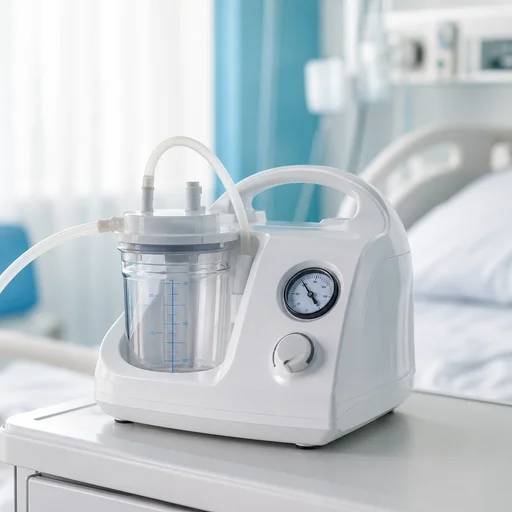
Think of a suction machine like a very precise, medically controlled vacuum cleaner. It creates negative pressure — a gentle pulling force — through a thin tube called a catheter. When inserted into the airway, it draws out mucus and secretions the patient can’t clear by coughing.
Before you touch anything, wash your hands thoroughly with soap and water. This is not optional. Infection control starts before the machine even turns on.
What You Need Before You Start
Gather your supplies first: the suction machine, a suction catheter of the correct size, disposable gloves, a clean cup or bowl with water, and normal saline if prescribed. Place the machine on a flat, stable surface and plug it into a grounded outlet. Never use the machine near water or plug it in with wet hands.
Check the machine before each use. Make sure the tubing is connected properly, the collection canister is secure, and the lid is sealed tightly. A poor seal means poor suction pressure and a messy spill.
Step-by-Step: How to Properly Suction a Patient
According to Cleveland Clinic’s tracheostomy care guidelines, here’s the correct sequence:
- Position the patient so their head and neck are well-supported. Conscious patients should be sitting upright. Unconscious patients should be on their side.
- Put on your gloves. Keep one hand “clean” — use it only to handle the catheter. Use the other hand to touch everything else.
- Connect the catheter to the suction tubing.
- Turn the machine on and test the suction by blocking the end of the tube with your gloved finger. You should feel it pull.
- Insert the catheter gently — without applying suction yet.
- Once it’s in position, cover the thumb port to activate suction, then withdraw the catheter slowly with a gentle rotating motion.
- Each pass should last no longer than 15 seconds for adults, and 5–10 seconds for children.
- Give the patient 20–30 seconds to recover between passes.
- Flush the catheter with clean water between passes to clear it of mucus.
- After you’re done, turn off the machine, dispose of gloves, and wash your hands again.
After each session, rinse the collection canister and connecting tubing with hot soapy water. A dirty machine is a source of respiratory infection. The tubing should be replaced at least once a month.
How Often Should You Use a Suction Machine?
There’s no fixed schedule that works for everyone. Frequency depends on the patient’s condition, how much mucus they produce, and whether they can cough effectively on their own.
For most patients at home, suctioning is done twice daily — once in the morning and once before bed. But the real answer is: suction when it’s needed, not on a rigid timer.
Signs That Tell You It’s Time to Suction
Watch and listen for these signs:
- Breathing sounds wet, gurgling, or rattling
- The patient is visibly struggling to breathe
- You can see mucus at the opening of the trach tube
- The patient is restless or anxious without a clear reason
- Oxygen levels are dropping on the pulse oximeter
A pulse oximeter is genuinely useful here. If oxygen saturation starts falling and the airway sounds congested, that’s a clear sign it’s time to suction.
According to Medical News Today, patients with newer tracheostomies or conditions that cause excess mucus may need more frequent suctioning early on. The need usually decreases as the body adjusts.
How Long Should Each Suction Session Last?
Each individual pass of the catheter should not exceed 15 seconds for adults. For children and infants, keep it to 5–10 seconds per pass. Richardson Healthcare recommends no more than three passes per session — any more than that increases the risk of mucosal damage and oxygen loss.
If you complete three passes and there’s still significant secretion, pause, let the patient stabilize for a couple of minutes, and reassess.
Suction Pressure and Catheter Size — Getting It Right
These two settings matter more than most caregivers realize. Too much pressure damages the airway lining. Too little pressure won’t clear the secretions. The wrong catheter size can collapse the airway or block airflow.
How Do You Set the Correct Suction Pressure?
Every suction machine has a pressure regulator — usually a knob on top. Turn the machine on, block the end of the tubing with your finger, and adjust the knob until the gauge reads the correct pressure for your patient.
Always use the lowest effective pressure. The goal is to clear the secretion, not to pull as hard as possible.
How Do You Choose the Right Suction Catheter Size?
Catheter size is measured in French units (Fr). The general rule is that the catheter’s outer diameter should not block more than 50% of the airway tube’s inner diameter. If it’s too large, it restricts airflow. If it’s too small, it won’t clear thick secretions.
Your doctor or respiratory therapist will prescribe the correct catheter size for your patient. Always follow that prescription.
Here’s a reference table based on standard clinical guidelines:
| Age Group | Catheter Size (Fr) | Suction Pressure (mmHg) | Max Suction Time Per Pass |
|---|---|---|---|
| Premature newborn | 5–6 Fr | 60–80 mmHg | 5 seconds |
| Term newborn (0–6 months) | 6–8 Fr | 80–100 mmHg | 5–10 seconds |
| Infant/Child (6 months–8 years) | 8–10 Fr | 80–100 mmHg | 5–10 seconds |
| Older child/teen (8+ years) | 10–14 Fr | 100–120 mmHg | 10–15 seconds |
| Adult | 14–16 Fr | 100–150 mmHg | 15 seconds |
Source: WisTech Open — Respiratory Therapy and Children’s Wisconsin Pediatric Suctioning Guide
Can a Suction Machine Be Used Without Medical Training?
Technically, yes — but it shouldn’t be attempted without proper instruction first. A trained caregiver or family member can perform suctioning at home, but only after being shown the correct technique by a nurse or respiratory therapist.
The risk isn’t the machine itself. The risk is inserting the catheter too far, using the wrong pressure, suctioning too frequently, or missing signs of distress. All of these can cause serious complications — airway trauma, infection, or dangerous drops in oxygen.
Before a patient is discharged home with a suction machine, their care team should walk the caregiver through the procedure in person, at least once.
What Precautions Should You Take While Using a Suction Machine?
Follow these every time:
- Always wash your hands and wear gloves
- Never plug in the machine with wet hands or near water
- Never insert the catheter without checking the suction pressure first
- Stop immediately if the patient shows signs of distress, bleeding, or extreme gagging
- Never suction for longer than 15 seconds per pass
- Don’t use the same catheter multiple times without cleaning it properly
- Never allow the collection canister to overfill — empty and clean it regularly
- Keep the machine on a flat, stable surface where it can’t be knocked over
Suctioning should only be done when there are secretions present. Suctioning a dry airway can damage the mucosal lining and cause more harm than the secretions would have.
Special Cases — Children, Infants, and Sleep
Can a Suction Machine Be Used for Infants or Children?
Yes — but with lower pressure settings and a smaller catheter, as shown in the table above. Children have more delicate airway tissue than adults, so the margin for error is smaller.
Children’s Wisconsin recommends measuring the catheter depth before insertion by holding it next to the child’s face from the tip of the nose to the earlobe. This gives you a safe insertion depth guide. Two to three drops of normal saline can also be used beforehand to help loosen thick mucus.
Children may move or resist during suctioning. You may need another person to help keep them still. Don’t restrain the child in a way that restricts their breathing.
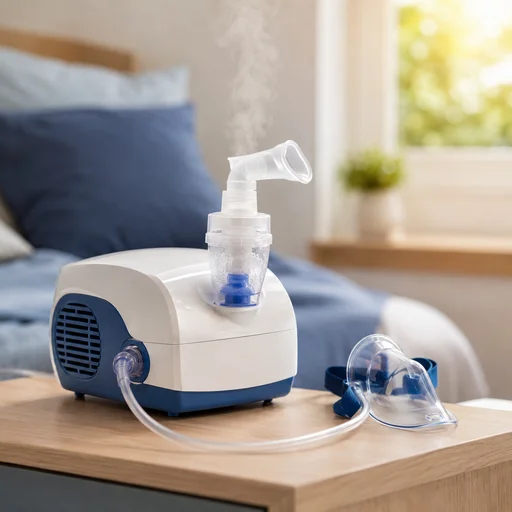
If your child needs ongoing airway support beyond suctioning, ask your doctor about nebulizer machines as a complementary option for loosening secretions.
Can a Suction Machine Be Used During Sleep?
This is a question many caregivers worry about. The short answer: it depends on the patient’s condition and what the doctor has recommended.
For patients with a tracheostomy, suctioning before bedtime is standard practice. Some high-dependency patients may need to be monitored and suctioned during the night if secretions build up. In those cases, a caregiver needs to be present and alert — the machine should not run unsupervised during sleep.
If nighttime secretion buildup is a recurring problem, raise this with the treating doctor. There may be positioning adjustments, humidification options, or other interventions that reduce the frequency.
Wrap-Up
Suctioning at home is manageable when you understand the basics. Use the right catheter size for the patient’s age. Set the pressure at the lowest effective level. Suction only when there are signs of congestion — not on a fixed schedule. Keep every session under 15 seconds per pass, with breaks in between. And always keep your equipment clean.
If you’re looking for reliable suction machines in Bangladesh, Marium Oxygen carries a range of portable and electric options — including the portable phlegm suction machine that works well for home care use. You can also get in touch with us if you’re not sure which model fits your patient’s needs.
Call us at 01714558407