Here’s something many people get wrong.
They assume that if your oxygen levels drop during sleep, the obvious solution is oxygen. Makes sense, right? Low oxygen equals more oxygen. But when it comes to sleep apnea, the answer isn’t quite so straightforward.
The relationship between sleep apnea and oxygen therapy is more complicated than most people realize. And understanding this complexity could make the difference between treating your condition properly and potentially making things worse.
What Actually Happens During Sleep Apnea
Sleep apnea isn’t just about low oxygen. It’s about your airway collapsing.
When you have obstructive sleep apnea, the soft tissues in your throat relax too much during sleep. They drop into your airway. Block it. Your breathing stops, sometimes dozens or even hundreds of times per night. Each pause reduces oxygen levels in your blood, and your body panics. You wake up just enough to start breathing again.
This cycle repeats. All night long.
The result? You wake up exhausted. Your blood pressure climbs. Your risk of heart disease, stroke, and diabetes increases. It’s brutal on your body.
The Oxygen Paradox
So naturally, you’d think adding oxygen would fix the problem. That’s where things get interesting.
Research shows that oxygen therapy does improve oxygen saturation in sleep apnea patients. Your blood oxygen levels stabilize. Sounds great… until you look at the rest of the data.
The same studies found that oxygen may increase the duration of breathing pauses. Think about that. Your airway is still blocked. But now your brain doesn’t get the urgent “wake up and breathe” signal quite as quickly because oxygen levels aren’t dropping as fast. The pauses last longer.
Carbon dioxide builds up. You might wake up with headaches. Confusion. Some patients feel worse, not better.
When Oxygen Actually Makes Sense
Don’t get me wrong. There are absolutely cases where oxygen therapy combined with CPAP machines helps specific patients.
People with both sleep apnea and chronic lung disease (like COPD) often need this combination. The CPAP keeps their airway open while the oxygen addresses their underlying lung condition. Patients with central sleep apnea, where the brain fails to signal breathing muscles properly, sometimes benefit from added oxygen alongside their pressure therapy.
High altitude. Heart failure. Certain respiratory conditions. These scenarios change the equation.
But here’s the critical point: Studies comparing CPAP alone versus oxygen alone showed that CPAP significantly reduced blood pressure in sleep apnea patients, while oxygen therapy did not. The New England Journal of Medicine published this research, and it’s pretty definitive.
Oxygen doesn’t address the root problem. Your airway still collapses. The breathing interruptions continue.
What Actually Works for Sleep Apnea
CPAP therapy remains the gold standard. And there’s a reason for that.
A CPAP machine delivers pressurized air through a mask, keeping your airway open throughout the night. It prevents the collapse that causes apnea in the first place. Blood oxygen stays stable because you’re actually breathing properly, not just because oxygen is being pumped in.
The difference matters.
When researchers looked at five-year survival rates, patients using CPAP had 95.6% survival rates, while those on oxygen therapy alone had only 80.6%. That’s a significant gap.
The Role of Oxygen Cylinders in Treatment
So where do oxygen cylinders fit into sleep apnea treatment?
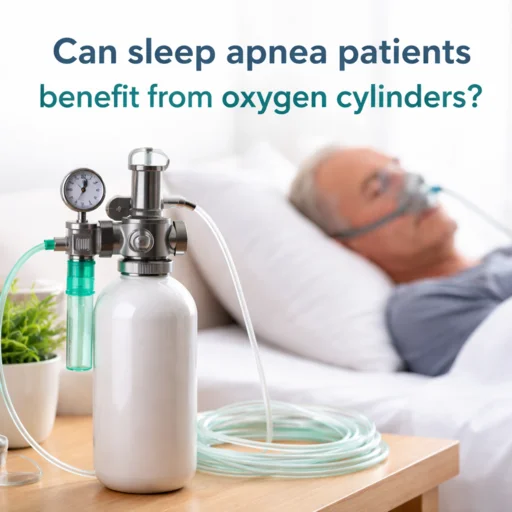
They’re not a replacement for CPAP. Period. But they can serve as an important backup or supplement in specific situations.
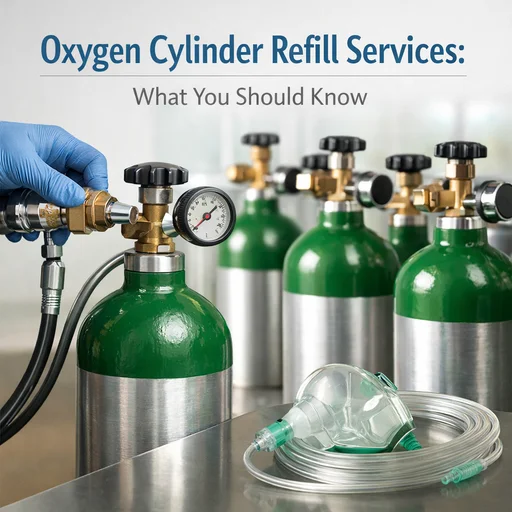
If your CPAP machine fails or you lose power, having an oxygen cylinder available provides emergency support until you can get your primary treatment working again. For patients with overlap syndrome (both sleep apnea and COPD), oxygen cylinders might be used alongside CPAP therapy as prescribed by a doctor.
Some people try oxygen therapy after upper airway surgery for sleep apnea. One recent randomized trial found that supplemental oxygen could improve certain metrics after surgical failure, though the results were mixed and this approach requires careful medical supervision.
The key word here? Supervision.
Never start oxygen therapy for sleep apnea on your own. The potential for harm is real. Using oxygen without addressing the airway obstruction can increase carbon dioxide levels, leaving patients confused and with serious headaches.
What You Should Actually Do
If you have sleep apnea and wonder whether oxygen cylinders would help, talk to your doctor. Get a proper sleep study. Understand your specific condition.
Maybe you have pure obstructive sleep apnea. In that case, CPAP is almost certainly your best option. Or perhaps you have a complex situation with multiple respiratory issues. Then oxygen might be part of a broader treatment plan.
At Marium Oxygen, we provide medical equipment to support your doctor’s prescribed treatment plan. We supply quality CPAP machines, oxygen concentrators, and cylinders for patients throughout Dhaka. Our team can help with installation and answer technical questions about your equipment.
But we’re not prescribing your treatment. That’s your doctor’s job.
Here’s what we know for certain: sleep apnea is serious. It damages your heart, your brain, your quality of life. Getting proper treatment matters. Understanding the difference between addressing symptoms (with oxygen) versus fixing the root cause (with CPAP) could literally save your life.
The Reality Is
Can sleep apnea patients benefit from oxygen cylinders? Sometimes. In specific circumstances. Under medical supervision.
But oxygen alone isn’t the answer for most people with obstructive sleep apnea. It treats a symptom while the root problem continues. CPAP therapy addresses the actual cause by keeping your airway open.
Work with your healthcare provider to find what actually works for you. Your sleep matters.