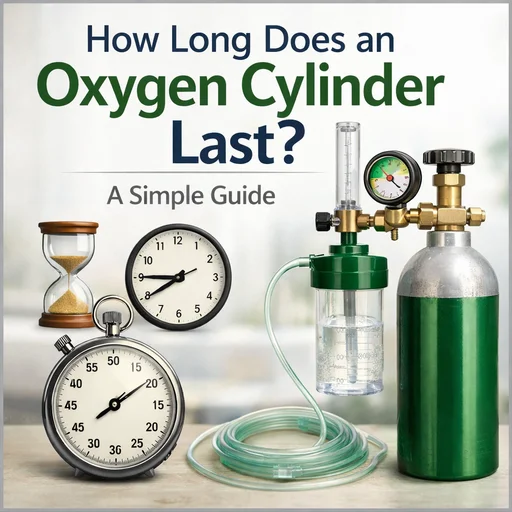
When someone tells you an oxygen cylinder will last “a few hours,” what does that really mean? And why does that number feel different every time you hear it? The honest answer is this: how long an oxygen cylinder lasts depends on a few straightforward things—plus a bit of math. Let’s walk through it in simple, practical terms.
You might need this info if you’re getting oxygen support at home or arranging supplies from a provider like Marium Oxygen. We’ll break down what determines duration, give you real examples, and share the kind of estimates health professionals use.
What Determines How Long an Oxygen Cylinder Lasts
Two things matter most:
1. Cylinder Size
Cylinders come in different sizes. The bigger the tank, the more oxygen it holds. In medical practice, cylinders are often labeled with letters (like D, E, G). Each letter corresponds to a typical capacity. Larger ones keep going longer.
2. Flow Rate (Liters Per Minute or LPM)
This is literally how fast oxygen is being delivered to you. A higher flow rate means the cylinder empties faster. Doctors set this based on your needs.
There’s a simple formula that professionals use to estimate how much time you have left:
Estimated Time (hours) = Cylinder Volume (liters) / Flow Rate (LPM)
So yes… it is partly math — but don’t worry, we’ll give you examples below.
Cylinder Sizes and Typical Durations
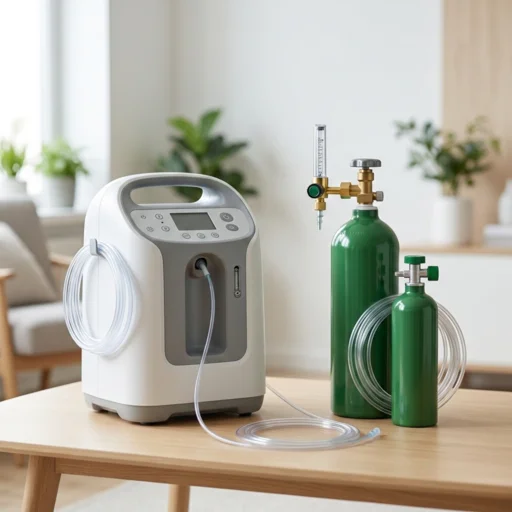
Here’s a realistic picture of a few standard medical oxygen cylinders.
Small Portable Cylinders (B and C)
These are lightweight and easy to carry, but they don’t hold much oxygen.
- B cylinder (~275 liters): ~4.5 hours at 1 LPM, ~1 hour at 4 LPM
- C cylinder (~470 liters): ~7.8 hours at 1 LPM, ~1.9 hours at 4 LPM
These are often used for short trips outside the home or as a quick backup.
Mid-Size Cylinders (D and E)
These are the workhorses for everyday home oxygen support.
- D cylinder (~1,700 liters): ~28 hours at 1 LPM, ~7 hours at 4 LPM
- E cylinder (~4,000 liters): ~66 hours at 1 LPM, ~16.5 hours at 4 LPM
In everyday home care, E cylinders are very common. They strike a balance between how much oxygen they hold and how easily they move.
To make that more straightforward…
Flow Rate (LPM)Estimated Duration (E Cylinder)
1 LPM ~33 hours
2 LPM ~16.5 hours
3 LPM ~11 hours
4 LPM ~8 hours
These numbers are approximate, but they help you plan your needs without surprises.
Large Stationary Cylinders
These are not carried around but are excellent for steady, long-term use.
- G cylinder (~10,300 liters): ~171 hours (~7 days) at 1 LPM, ~42 hours (~2 days) at 4 LPM
You’ll find these more often in hospitals, clinics, and setups where mobility isn’t required.
Don’t Forget: Flow Rate Makes All the Difference
Here’s the point that trips people up: duration drops fast as flow increases.
Imagine two people with the same E cylinder:
- One is on 1 LPM of oxygen.
- The other needs 4 LPM to feel comfortable.
The first could go almost 33 hours on that cylinder. The second could only last around 8 hours. That’s a big difference.
That’s why your doctor or oxygen therapist asks about your breathing rate and condition. They tailor your flow rate to your clinical need.
What About Conserving Devices?
Some regulators deliver oxygen only when you inhale (sometimes called pulse-dose or conserving regulators). With these devices, the same cylinder can stretch much longer. For example, an E cylinder with a conserving device might last nearly twice as long as it would with a continuous flow.
That’s great for mobility and convenience, but it’s only useful if a clinician confirms it’s right for your breathing pattern.
Real-World Example
Let’s say you need 2 LPM of oxygen all day and night.
- A standard E cylinder can last roughly 16 hours.
- If you’re using a conserving regulator, that might extend to nearly 24 hours before you need a refill.
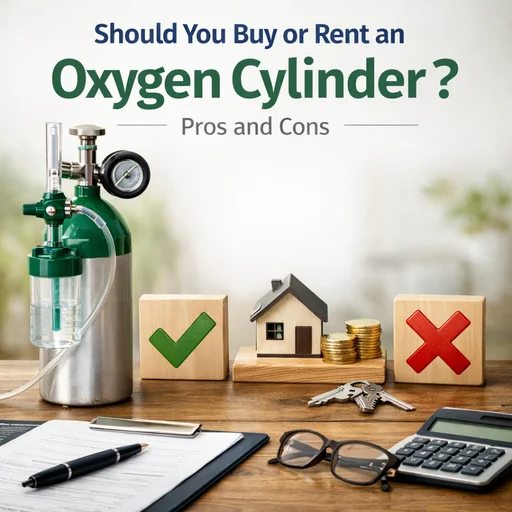
At Marium Oxygen, we make these choices simple. We help you choose the proper cylinder size for your needs, offer refill services, and can deliver or set up at your home in Dhaka within minutes. We support buying, renting, and refilling 24/7.
Helpful Tips From Experience
Here are a few practical points people often overlook:
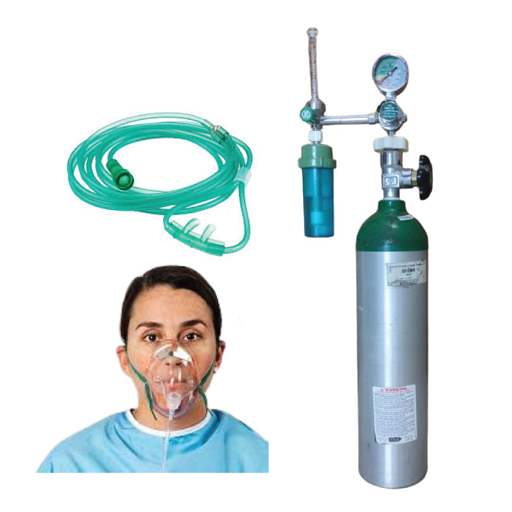
- Always check the pressure gauge before use to see how full your tank is. The gauge tells you the pressure left inside.
- Keep a backup cylinder if you rely on continuous oxygen. You don’t want to run out late at night.
- Temperature affects duration. In very hot or cold conditions, gas behaves differently, which could slightly change your real-world hours.
Final Thoughts
When someone asks, “How long does an oxygen cylinder last?” the answer isn’t one number. It’s a range. It shifts with cylinder size, your flow rate, the type of delivery regulator, and how you use it.
But here’s the heart of it:
- Smaller tanks are suitable for short use or transport (a few hours).
- Mid-size tanks, like E cylinders, provide a reliable daily supply.
- Larger cylinders can stay in place for long-term needs.
If you want help choosing the right equipment or arranging oxygen delivery or refills, Marium Oxygen is ready to support you, day or night.