

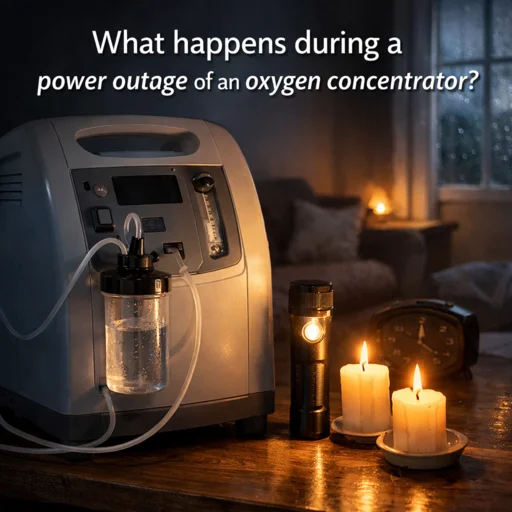
The electricity flickers. Then it’s gone. For most people, that’s an inconvenience. For someone who depends on an oxygen concentrator, that moment carries a very different weight.
A power outage of an oxygen concentrator is not just a technical hiccup. It’s a medical event. Understanding exactly what happens—and what to do about it—could make all the difference.
The Machine Stops. Immediately.
Here’s the hard truth: oxygen concentrators shut down the moment power is lost. There’s no grace period. No slow fade. The compressor stops pulling in air, the molecular sieve stops separating nitrogen from oxygen, and the flow to your nasal cannula or mask cuts off.
Unlike oxygen tanks, which store compressed or liquid oxygen and keep delivering it without power, a concentrator generates oxygen on the fly. It needs electricity to work. Every second it runs, it pulls in room air, strips out nitrogen, and delivers concentrated oxygen. Take away the power, and the whole process stops.
Most units will sound an alarm when this happens. If your device stops due to a power outage, an alarm will sound. Unplug the device and use your backup oxygen source until power is restored. That alarm is not something to silence and ignore. It’s telling you to act.
What Happens to Your Body
The concentrator stopping doesn’t mean you immediately run out of oxygen. You have some time. But how much depends on your condition, your prescribed flow rate, and your level of activity.
Without a stable oxygen supply, individuals may experience respiratory distress, hypoxemia, and other complications. Hypoxemia — low oxygen in the blood — can develop faster than most people expect. Symptoms include confusion, rapid breathing, increased heart rate, and, in severe cases, loss of consciousness.
One thing that genuinely helps: staying calm and still. Limiting physical activity during a power outage can be helpful, especially if your oxygen is running on batteries. The less you move, the less oxygen your body demands. Sit down. Breathe slowly. And reach for your backup plan.
The Backup Plan You Need Before Anything Happens
This is where preparation becomes everything.
An Oxygen Cylinder as Your Emergency Reserve
The most reliable backup during a power outage is a traditional oxygen cylinder. It doesn’t need power. It doesn’t need charging. You open the valve, connect your cannula, and you’re breathing again.
Have your provider set up one or more large compressed oxygen cylinders in your home for emergencies. Know how long the cylinders last. Do not be alone if at all possible. The moment your concentrator stops, someone in your home should be ready to make the switch. Practice it before you need it.
Charged Batteries for Portable Concentrators
If you’re using a portable oxygen concentrator, your first line of defense is a fully charged battery. Keeping an extra concentrator battery fully charged will give you oxygen for longer if the power goes out. If possible, keep enough fully-charged batteries to last a couple of days.
This doesn’t replace the cylinder backup, but it buys you time.
A Generator for Extended Outages
For longer outages, a generator can power your oxygen concentrator and keep your home running normally. One important rule: never run a generator indoors. Carbon monoxide poisoning is a real danger, and it eliminates the very safety you’re trying to create.
An outdoor generator can provide emergency electricity during a power outage. If a generator isn’t in your budget, consider an inverter that can charge batteries from your car’s 12-volt port. It’s not a perfect solution, but it’s better than nothing.
Tell the People Who Need to Know
There are a few calls worth making before any emergency happens.
Contact your local electric company, fire, and police departments, and let them know you require electricity to use home medical equipment such as supplemental oxygen. Many utility companies maintain priority lists for customers with medical needs. If there’s a planned outage or a storm knocking out power in your area, being on that list means you’re higher up the restoration queue.
Also talk to your neighbors or nearby family. Let them know you depend on oxygen therapy at home and ask them to check on you if the power goes out. A simple conversation now could prevent a crisis later.
A Note on Power Surges
Power outages don’t always end cleanly. When electricity comes back, it often returns with a surge. Power surges can damage oxygen concentrators. Plugging the unit into a surge protector can prevent electrical surges from causing irreversible damage.
A surge protector is a small investment that protects an expensive, life-critical machine. It’s worth having one.
Before the Next Outage
The time to prepare is not when the lights go out. It’s right now, on an ordinary day when you have time to think clearly.
Talk to your doctor about your oxygen needs during an outage. Arrange a backup cylinder with your oxygen supplier. Do not reduce your oxygen flow rate to extend the life of your battery or oxygen supply without talking to your healthcare provider. That’s a decision that needs medical guidance, not guesswork.
Keep your phone charged. Have emergency contacts written down somewhere accessible, not just saved in a phone that might die. Know where your backup equipment is and make sure the people around you know too.
If you’re in Dhaka and need a reliable backup oxygen cylinder or want to ask about your options, Marium Oxygen is available 24/7 and offers fast delivery within 60 minutes in Dhaka. Having a cylinder on hand before an emergency isn’t overcaution. It’s common sense.
A power outage of an oxygen concentrator doesn’t have to become a crisis. With the right preparation, it becomes a manageable moment — one you’ve already planned for.